 Watchover
Blog ·
How to tell your family you gamble
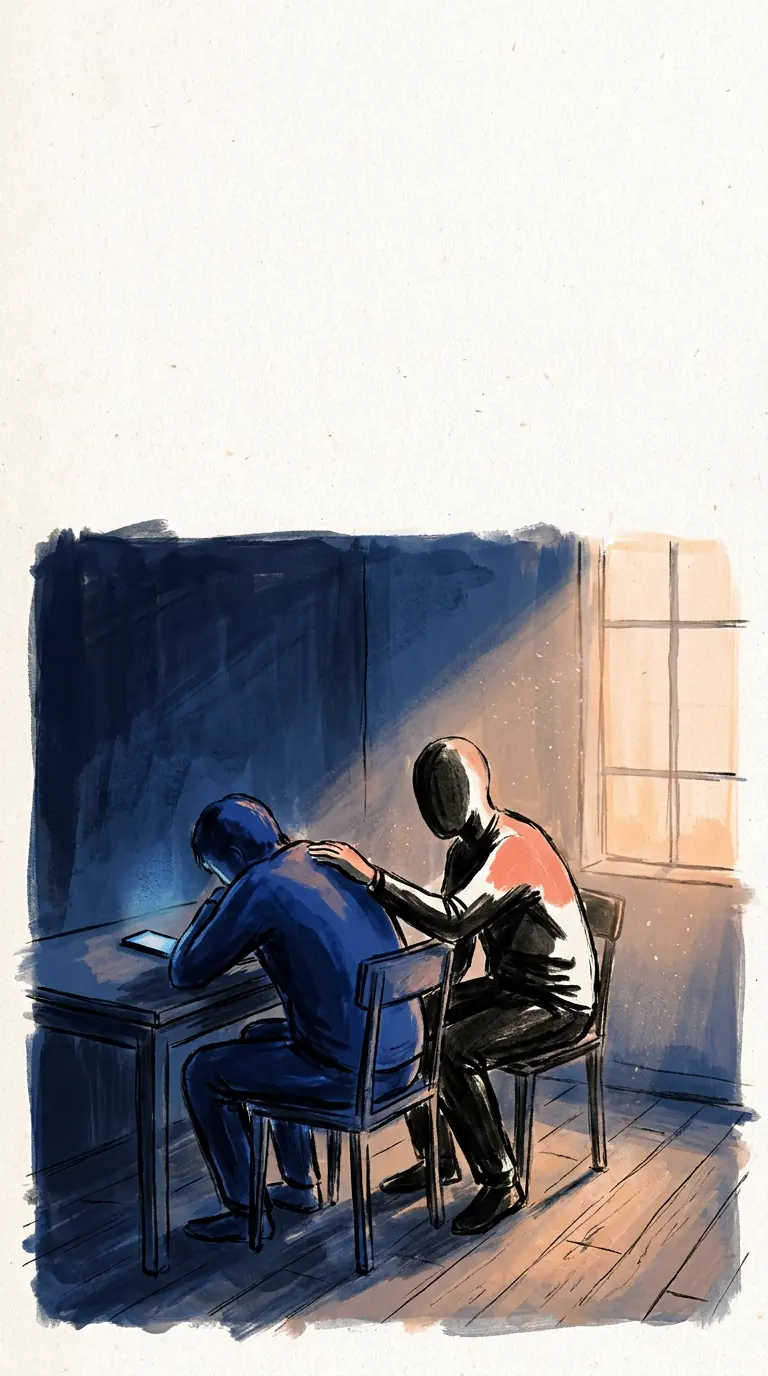
You have rehearsed it in the shower, in the car, at 3 a.m. And each time the sentence stops somewhere in your throat. Telling the people you love that you gamble is one of the hardest things you can do. It is also, for many people, the moment the weight finally starts to lift. Here is a way to prepare so that it goes better than you fear.
Why it feels so hard
Gambling is a secret that grows. The longer it is kept, the more there is to explain: the hours, the money, the small lies that made it possible. Shame says that telling will cost you everything. In practice, most families have already sensed that something is wrong. Many say afterwards that the silence was harder than the truth.
You do not have to tell everyone at once, and you do not have to tell it perfectly. You only have to start.
Choose the person and the moment
- Start with one person. The one most likely to listen first and react second. Others can follow.
- Pick a calm, private time. Not in the middle of an argument, not right after a loss, not with children in the room, not on a phone call between meetings.
- Leave room afterwards. Do not say it five minutes before someone has to leave. Give the conversation time to breathe.
- Do not do it in the urge. If you are in the middle of a hard night, get through it first. Our post on why gambling urges hit at night can help with that.
What to say first
The first sentence matters most, because it sets the tone. Keep it short and plain. For example:
- “I need to tell you something hard. I have been gambling, and it has gotten out of control.”
- “I am telling you because I want to stop, and I do not want to do it alone.”
After that, say what you know and leave out what you do not. You do not need the exact numbers on the spot, but do not shrink them either. Avoid “it is not that bad” and “it only happened a few times” if that is not true; being caught in a smaller version of the story hurts more later than the whole truth does now.
Talking about money
Money is usually the part that frightens people most. It helps to treat it as a separate step. Say clearly whether there is debt, and roughly how much. If you do not know yet, say that, and agree to sit down together and work it out. Do not ask the other person to pay it off in the first conversation. A shared, written list of what is owed, and a plan for who looks after the money for now, is a much better first step. Our money plan for the first 30 days has one you can borrow from.
What they may feel, and what you can do about it
Expect strong reactions: anger, tears, silence, questions that sting. Anger is often fear wearing a different coat. You do not have to defend yourself, and you do not have to fix their feelings in that moment. “I understand why you are upset” is enough. If it becomes too heated, it is fine to say, “Can we pause and talk again tomorrow?” as long as you actually come back.
Trust will not return in one conversation. What rebuilds it is what you do over the weeks that follow: being honest when it is uncomfortable, and making it harder to slip in secret.
After the conversation
Telling someone is not the end of the plan; it is the start of it. Watchover blocks gambling sites in Safari, Chrome and in-app browsers. You lock the protection in a calm moment so it cannot be switched off in two seconds. If a family member agrees to be your supporter, they hear within minutes if it is switched off. They never see which site, your browsing history, your location or your messages. The supporter side is always free.
If your family wants to help but does not know how, our post on supporting someone who wants to stop gambling is written for them. And if you have already slipped since you last spoke, I gambled again, what now? is for that morning. For the bigger picture, see our guide on how to stop gambling.
Frequently asked
Should I tell my family I gamble?
Many people find that telling at least one trusted person lifts a lot of the weight and makes a plan possible. You decide who and when; starting with one person you trust is a reasonable first step.
What should I say first?
Keep it short and honest: that you have been gambling, that it has gotten out of control, and that you want to stop and do not want to do it alone. Details and numbers can follow once the first moment has passed.
This post is for information only and isn't a substitute for medical diagnosis or treatment.